
A Military Career
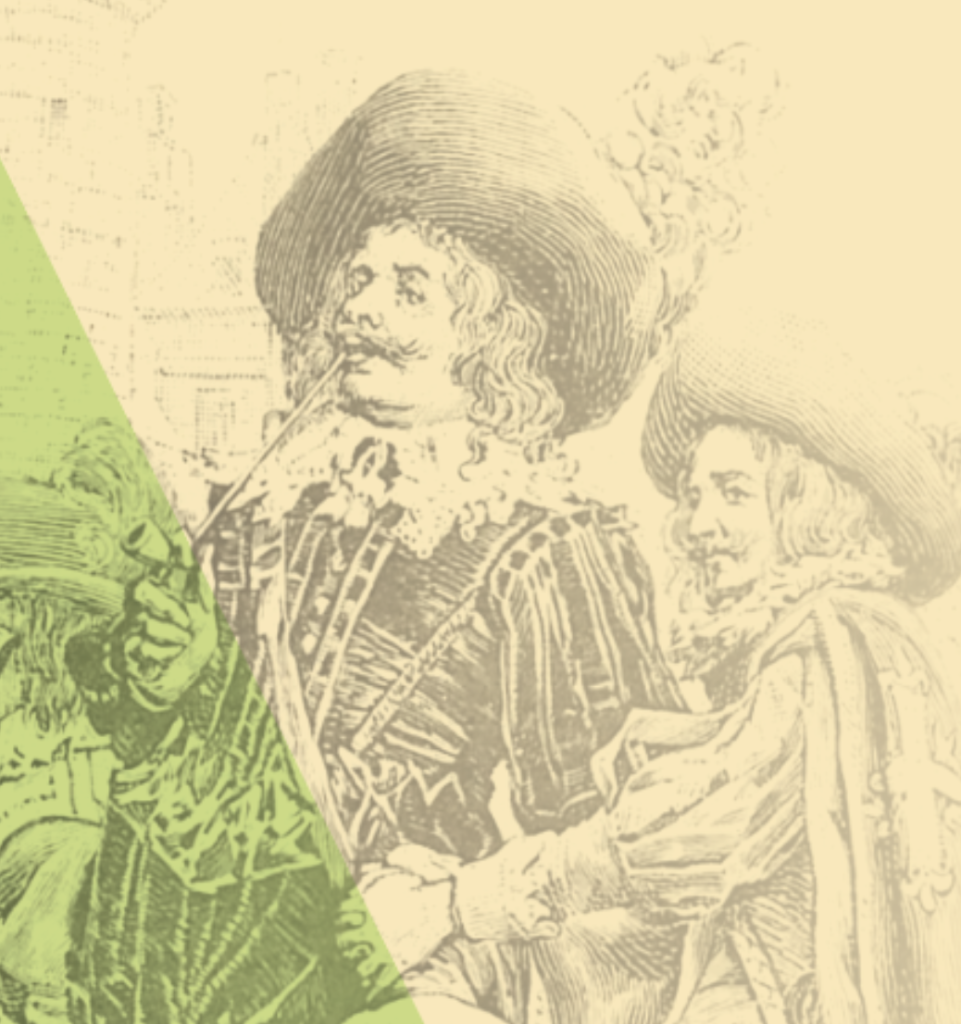
Gatien de Courtilz, Sieur de Sandras and du Verger, came from an old aristocratic family. Around 1660, he began a military career by joining the Musketeers: “First a Musketeer, then a cornet in the Royal-Etranger, then captain in the Beaupré-Choiseul regiment, from which he was dismissed after the Treaty of Nijmegen…” (Bibliothèque de l’Arsenal, Bastille Archives, file 10 497).
Although he is mentioned as a Musketeer here, his name does not appear in the official rosters of the company. He left military service in 1678 following the Treaty of Nijmegen and, without personal fortune, turned to writing for a living.
Making a Living from Writing
In 1683 one of his earliest works, The Conduct of France since the Treaty of Nijmegen, printed in the Netherlands and illegally distributed, caused a scandal by harshly criticizing Louis XIV’s policies. While this might suggest Courtilz de Sandras was a politically engaged writer, he was primarily motivated by financial survival. Shortly after, he anonymously published a Reply to the Book Entitled The Conduct of France, completely contradicting his previous work—a clever financial strategy he employed repeatedly.
He published many chronicles, political works and biographies of notable figures of his time.
The Memoirs of Monsieur d’Artagnan
Criticizing the King and the government in the 17th century was dangerous, and Courtilz de Sandras quickly learned this lesson as he was imprisoned in the Bastille from April 1693 to March 1699.
According to some sources, it was during this first imprisonment that Courtilz conceived the idea and gathered information to write The Memoirs of Monsieur d’Artagnan. At the time, the Bastille governor was François de Monlezun, Seigneur de Besmaux, a longtime friend of d’Artagnan, and it is possible that Courtilz received confidences about d’Artagnan from Besmaux during his imprisonment. However, Courtilz’s writings suggest a strained relationship between the two men, with Courtilz accusing Besmaux of enriching himself at prisoners’ expense.
Some have speculated that Courtilz, as a Musketeer himself, might have served under or been close to d’Artagnan. In point of fact, however, Courtilz probably served in the second Musketeer company under Colbert de Vandières, not in d’Artagnan’s first company.
So where did his sources come from? Courtilz claimed to have gathered various documents from d’Artagnan’s personal papers and simply connected them. This claim is dubious, however, as the historical d’Artagnan was not a prolific writer, he made many spelling mistakes and his surviving writings are mostly in the form of official letters.
It is likely that much of what Courtilz recounts about d’Artagnan is in fact fictional, woven into a framework of true events. While some details are accurate, Courtilz mixes up dates, people and events, and his use of history is essentially as a backdrop for political intrigues, espionage, escapes, and duels—techniques designed to entertain readers.
Yet it is precisely these memoirs that Dumas used as a historical foundation for The Three Musketeers, continuing to reshape reality in order to bring the myth to life.