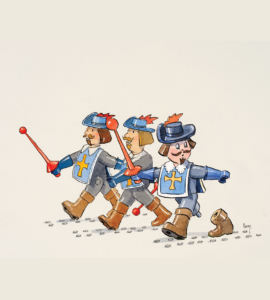
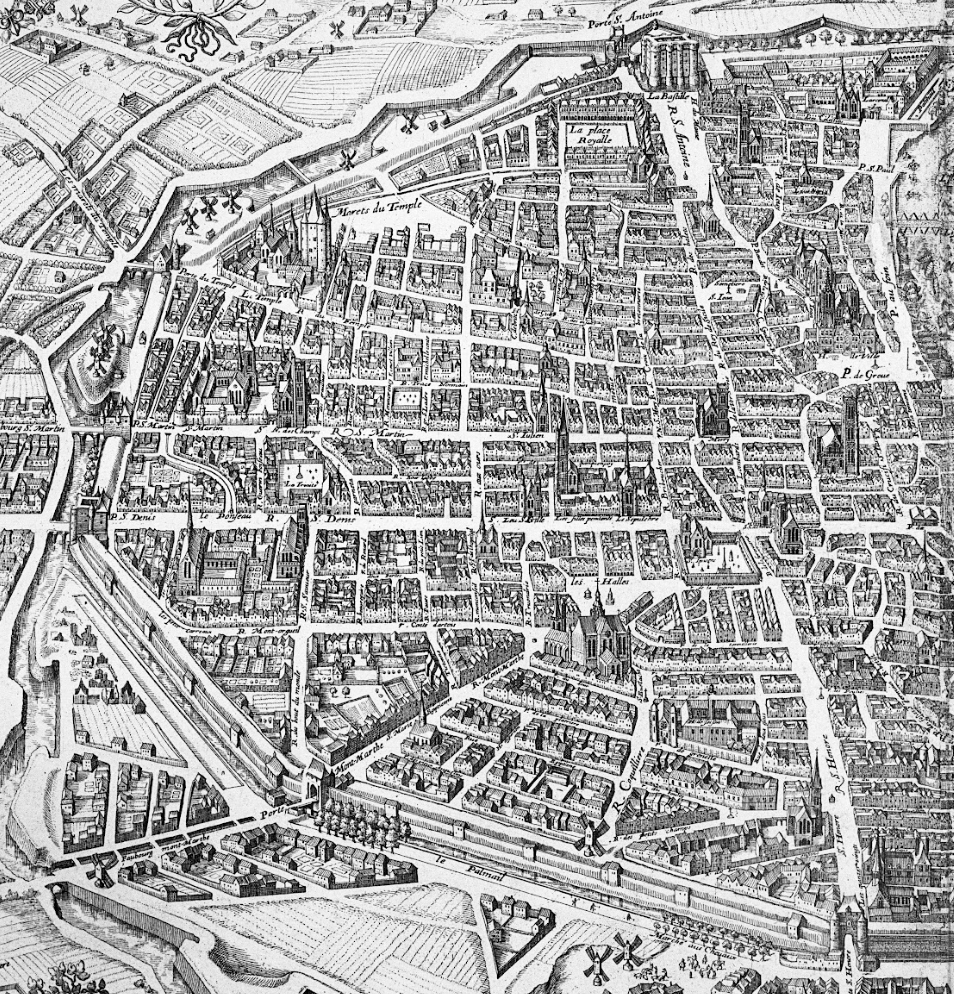
According to tradition, Charles (later known as d’Artagnan) arrived in Paris with a letter of recommendation from his father, addressed to a high-ranking officer, to help him join the Gardes françaises—an elite military corps made up of around twenty companies under the command of the Duke of Épernon. D’Artagnan is thought to have arrived in Paris in 1630. It was Duke Antoine III de Gramont who introduced him at court, where he would go on to rub shoulders with many of the leading figures of his time.
In Dumas
Although Dumas’s Three Musketeers travel far and wide—from Flanders to Brittany and even England—Paris remains their main stage. The city still bears traces of these tales, particularly around the Saint-Sulpice district.
Dumas, like his heroes, came to Paris from the provinces. He captures the capital with both admiration and a critical eye, blending accurate detail with approximation and history with fiction.
According to Courtilz de Sandras, d’Artagnan began his military career around 1640 in the company of the Sieur des Essarts, brother-in-law to Monsieur de Tréville. Dumas adopted this version but shifted the timeline to 1625 to insert his hero into the Siege of La Rochelle.