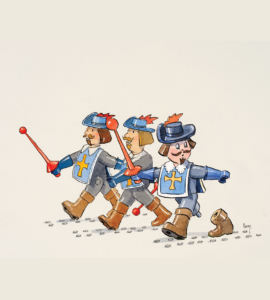
As the King’s armed force, the Musketeers were sometimes used by the monarch to suppress protests, often related to taxes or rising bread prices.
In the spring of 1670 a major revolt broke out in Aubenas, in the Vivarais region, where many peasants rose up against new taxes. The uprising was fueled by false rumours about additional levies. The peasants rallied behind a minor nobleman, Antoine de Roure, whom they chose as their leader. Acts of violence increased and the unrest became political, with the peasants demanding the expulsion of royal officers whom they blamed for the oppressive taxes.
Initially the government close not to respond, thereby allowing the movement to spread across the region. Eventually, in June, a military expedition was organized under General Le Bret and cavalry commander d’Artagnan, while a detachment of the King’s two Mousquetaire companies were ordered to join the force.
The deployment of the Mousquetaires was highly symbolic. The royal army numbered six thousand professional soldiers against two thousand peasants, and the King’s response was mainly a show of force meant to intimidate. The final clash took place on July 25 at Lavilledieu, where the peasants were brutally crushed by the Mousquetaires and other soldiers. A harsh repression followed throughout the region, though d’Artagnan left with his men on August 10 and did not participate in the confiscations or summary executions ordered by the harsh Marshal Le Bret. According to some accounts, d’Artagnan refused to take part in the looting, often accompanied by murder and rape, and ordered his men to do the same.
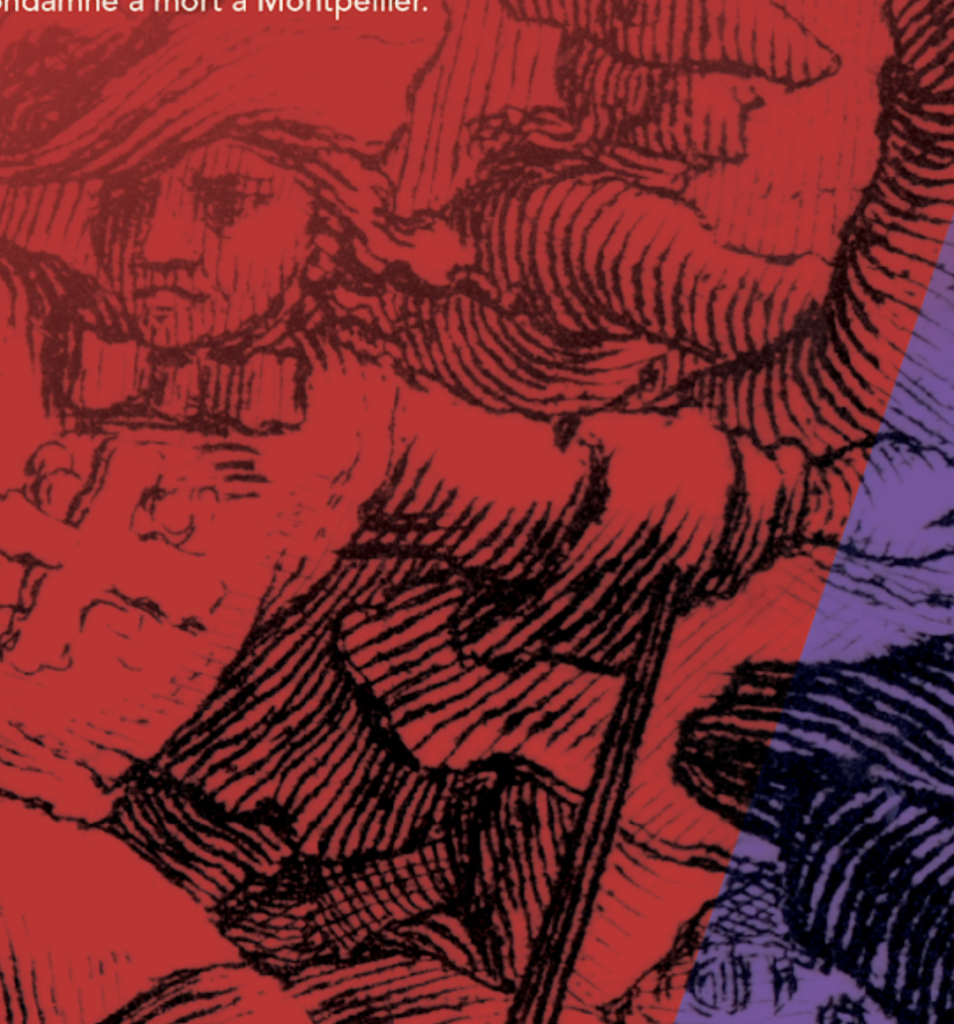
Pierre Quarré d’Aligny, one of d’Artagnan loyal Mousquetaires, wrote in his Memoirs: “They killed as many as they wanted.” In reality, the Mousquetaires did what they did best: fight as warriors. The revolt was swiftly ended, while Roure fled, hid for several months and was eventually arrested in October and sentenced to death in Montpellier.