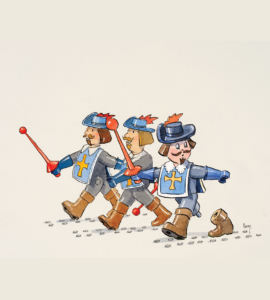
Bound by family and political bonds, Musketeers were often unruly figures at court and in Paris. Though generally drawn from the high nobility, they were often very young and on frequent occasions engaged in disorderly conduct, sparking clashes with law enforcement that sometimes resulted in fatalities or arrests.
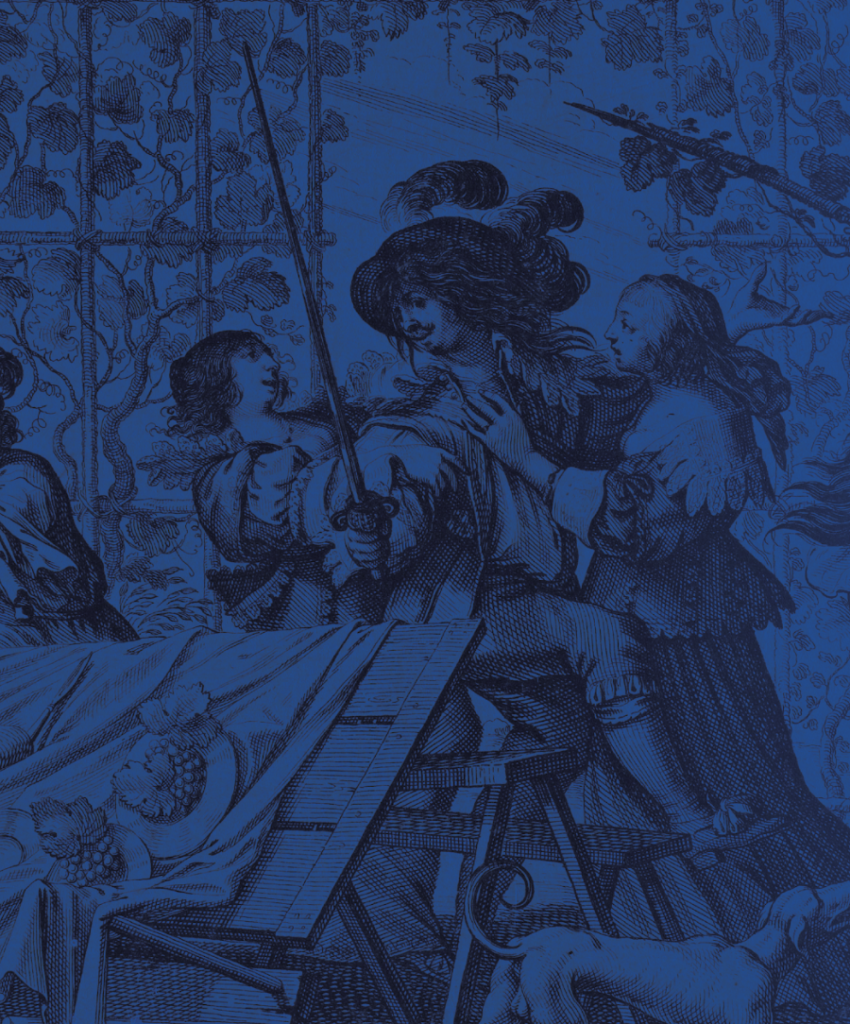
Dueling was a common practice among Musketeers and could end fatally. Armand de Sillègue d’Athos d’Autevielle, for example, was found dead on 21 December 1643 at the Pré-aux-Clercs, a famed dueling ground in Paris.
Despite their reputation as unruly swordsmen, Musketeers played a key role in maintaining public order. At a time when no police force existed, authorities often relied on the army to suppress civil unrest, popular uprisings or revolts among the nobles—particularly during the Fronde (1648–1652).
Thus, Musketeers were at one and the same time feared duelists and instruments of royal repression, wielding the sword for honour and the musket to enforce the King’s authority. Yet they were also known to provoke fights, especially under the influence of alcohol.
Dumas's World
The Musketeers’ legendary reputation was partly shaped by the many duels they fought, adding to their mystique. Depicting their rivalry with Cardinal Richelieu’s guards, Alexandre Dumas vividly captures this tradition in his works. This tension reflected a real conflict between two factions—one in which the King, far from acting as an impartial sovereign, often behaved more like a clan leader.